Empathy-focused programming drives organizational transformation for zoos and wildlife parks
October 13, 2026
Leona Lionheart saves the world. The fictional character is the star of the stage at Kohl’s Wild Theatre – a partnership facilitated by the Zoological Society of Milwaukee at the Milwaukee County Zoo’s mainstage – where Arts Education Manager Sarah Zapiain and her team have quietly embraced a novel approach to storytelling, using empathy as a compass.
Across the United States, a growing number of zoos, aquariums, and wildlife parks have shifted the way they talk about animals and conservation, putting the spotlight on empathy.
The Leona Lionheart Saves the World show introduces audiences to three real-life conservationists: Anna Comstock, Eugenie Clark, and Wangari Maathai. The three female scientists broke ground in their respective fields through a combination of passion, curiosity, and empathetically considering the perspectives of the animals and ecosystems they studied.
“Eugenie Clark taught us that sometimes our passions take us to unexpected places,” said Sarah. “She changed a lot of people’s minds about sharks and how people used to think they were mindless monsters, but they’re actually these beautiful, intelligent creatures.”
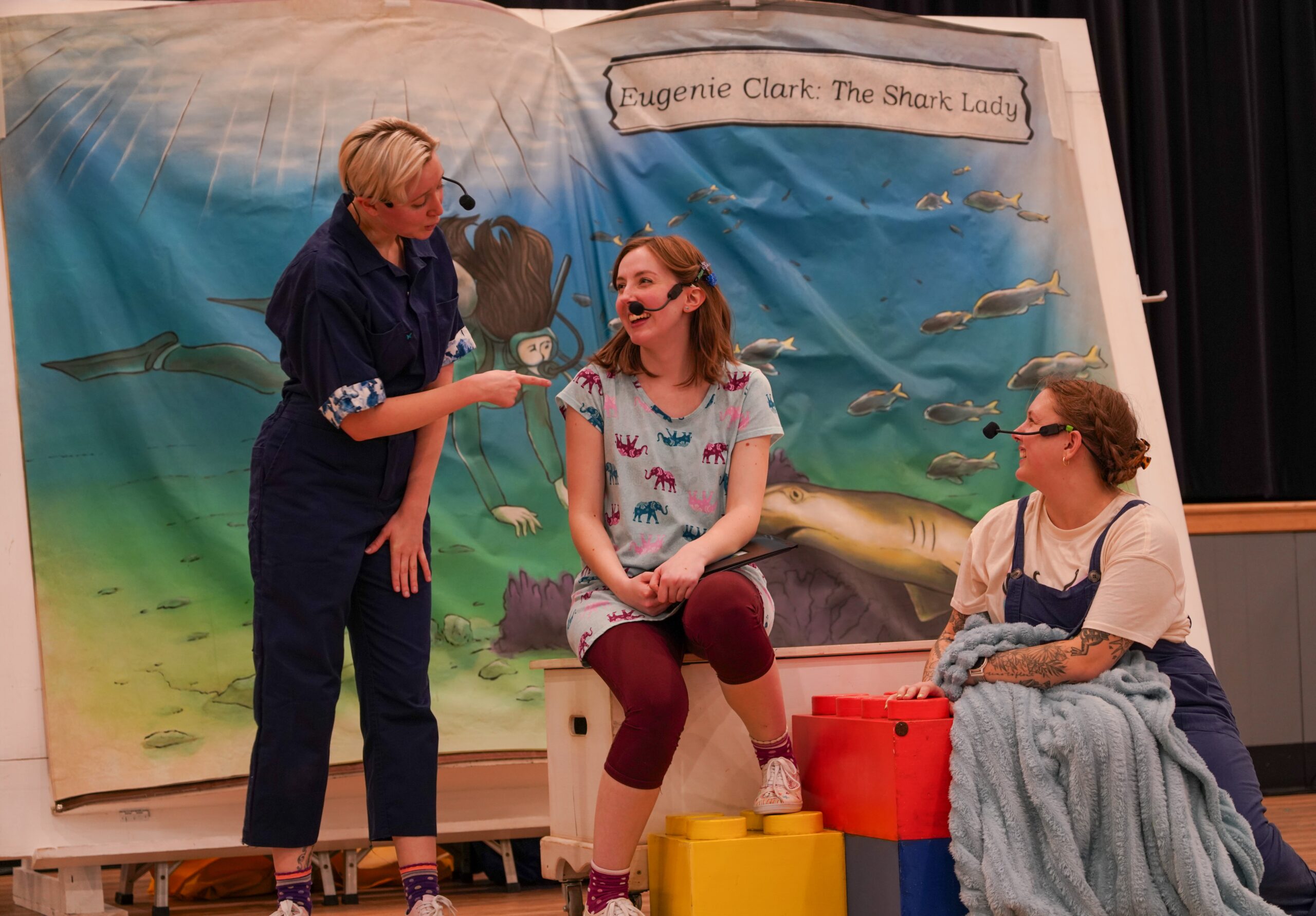
Provided by the Zoological Society of Milwaukee
Empathy before action
After each production of the live show, Zoological Society of Milwaukee staff ask the audience of third, fourth, and fifth graders to think like the trailblazing scientists. They ask what kinds of animals the students are curious about, which animals they hope to see in nature, and which animals they may have thought were scary until they learned more about them.
“We get answers like spiders and snakes, and that’s great,” said Sarah. “But we hope that by asking questions about these animals, we can help change people’s minds about how extraordinary they are. For the Leona Lionheart show in particular, the goal was less about what we can do to help conserve sharks, but more about approaching conservation through an empathy lens.”
Leona Lionheart Saves the World is one of several productions Sarah’s team recently revamped or created with funding from Woodland Park Zoo’s Advancing Empathy Grant Program. The broad-ranging projects supported by empathy grants give zoos and aquariums the opportunity to infuse empathy into their programming with the goal of advancing animal wellbeing. More than 30 organizations have also joined the Advancing Conservation through Empathy for Wildlife (ACE for Wildlife®) Network, which provides additional opportunities for collaboration and connection among organizations that care for animals. This work is supported by funding from Margaret A. Cargill Philanthropies.
“Empathy is what drew me to theater and storytelling in the first place. It’s the key to connecting. You can be different from somebody in so many ways, but empathy is the thing that allows us to see another perspective. And art and storytelling are such powerful ways of stepping out of yourself and into the eyes of someone else.”
— Sarah Zapiain, Arts Education Manager, Zoological Society of Milwaukee
Research supports empathy’s effectiveness
For many people who work at zoos and aquariums, empathetic storytelling is a dramatic shift from objective fact-giving. And while all organizations in the ACE for Wildlife Network follow science-supported animal care, communicating openly about animals’ agency and preferences has been a change for some.
“They’re talking about something that they love so much,” said Emily Bernhardt, the Empathy Network Strategist at Woodland Park Zoo. “For so many people in the ACE for Wildlife Network, the way they’re trained to talk about animals is from a very objective perspective. I think this [empathy framing] gives them permission to break that objective wall down a little bit and create something that’s a more meaningful experience for them as the interpreter or program designer or whatever role they’re in.”
Using empathy to broaden perspectives
At Northwest Trek Wildlife Park near Tacoma, Washington, empathy has helped broaden perspectives and expertise available to staff and guests. The 723-acre park is nestled into the Cascade Mountains, which are part of the traditional homelands of the Nisqually people. Blossoming relationships between Northwest Trek Wildlife Park staff and Nisqually elders eventually led to the creation of a paid fellowship position that brings Nisqually ecological expertise to the park. The fellowship is funded by an Advancing Empathy Grant.
So far, Northwest Trek Wildlife Park has employed two fellows.
“They both brought in such incredible work,” said Naturalist Nicole Hennigan, noting that the first fellow was hired by the natural resources department in her home community. “Both fellows have brought their incredible perspectives and experiences to Northwest Trek, and we are grateful to continue our relationships.”
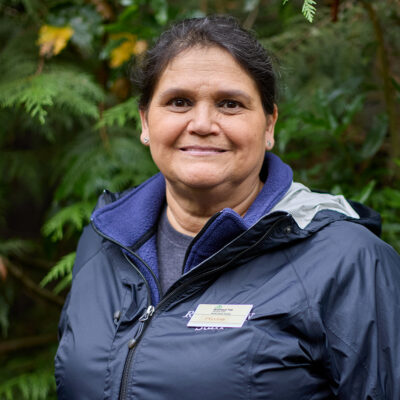
Rose Wells, a Nature Engagement Fellow at Northwest Trek Wildlife Park. Photo by John Forschauer, provided by Northwest Trek.
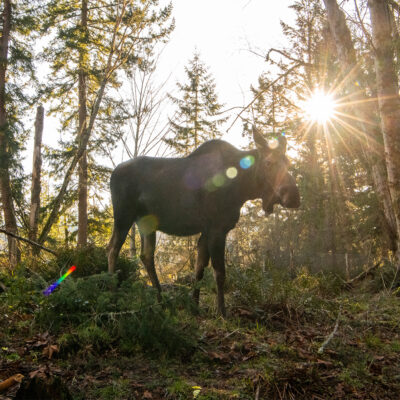
A moose named Luna, pictured in the free-roaming area of Northwest Trek. Photo by Katie Cotterill, provided by Northwest Trek Wildlife Park.
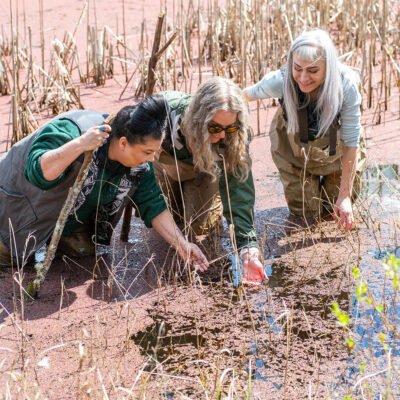
Nature Engagement Fellow, Shana Squally (left) looks for Western Toads. Photo by Katie Cotterill, provided by Northwest Trek Wildlife Park.
In addition to enhancing Northwest Trek Wildlife Park programming with traditional knowledge, the fellows have also connected Nisqually speakers to the wildlife park. Through the newly created Cultural Connections series, speakers are invited to share their culture, heritage, and projects that steward the Nisqually watershed with the park’s staff and volunteers. The partnership has led to stronger connections between Northwest Trek Wildlife Park and Nisqually community members.
“Sessions are open to all staff to come in and sit,” said Nicole. “It very much feels open to whatever speakers want to talk to us about, what they want us to know as educators at this park, and as the people who are taking care of this park and this land. It’s been so exciting to see how excited the community is about Northwest Trek, and in those ways that we can also give back and make sure that we are supporting tribal lands.”
In April, Nicole collaborated with current fellow Shana to incorporate more traditional ecological knowledge into her Online Wildlife Academy program, which can be viewed by people not just in the Pacific Northwest, but around the world.
“Before, I would say, ‘Here’s what we can do at school to help protect the forest,’” said Nicole. “But now, with Shana’s input, I can incorporate that traditional ecological knowledge to say, ‘Here’s how you can protect the forest, and here is how the Nisqually people have been protecting the forest since time immemorial.’”
Empathy, action, and hope
For both Nicole at Northwest Trek Wildlife Park and Sarah at the Zoological Society of Milwaukee, empathy-centered programming has had a profound impact on their organizations and personal relationship to conservation. One of the significant benefits of empathy, they say, is the way it naturally spurs people to action, inviting hope.
“My work in conservation theater has personally rekindled a lot of hope for me,” said Sarah. “Conservation centers around hope, because it’s all about thinking about the future. And empathy, joy, and hope are emotions that move us to act. They’re all pieces of the same engine that’s moving forward, into a brighter future.”

Author: Alauna Yust
An Emmy award-winning multimedia producer, writer, and filmmaker based in the Twin Cities. In 2018, she founded Rookwood Media, a video production company that tells stories leading to a kinder, greener, more equitable world. Her work has been distributed nationally by PBS, The Moth Radio Hour, Public Radio Exchange, and many other outlets.