Changing more than names: how Camp Fire is confronting its legacy of cultural appropriation
April 20, 2026
This story was first published by Camp Fire in November 24, 2025. Written by HK Gilbert, Director of Program Services at Camp Fire.
For over a century, Camp Fire’s mission has been to provide a safe place where kids come together to learn, grow, and build connections with nature.
But like many legacy organizations, our past also includes a history of harm. Specifically, taking and using Native American traditions, symbols, and stories without permission – also known as cultural appropriation.
Today, we recognize that practices such as these are disrespectful to the centuries of Native peoples and cultures that came before, and the diverse, vibrant Native American communities present today. We understand how harmful it is for Native youth to see themselves as caricatures within a youth development organization like Camp Fire.
We also acknowledge that this isn’t just a problem of the past; it’s still happening today, particularly within the outdoor/camping and scouting industry. We hope that our work in this area will inspire others to work toward systemic changes that benefit all.
To that end, we’d like to reflect on the progress we have made so far over the past five years, the challenges we faced (and how we addressed them) and what is next on Camp Fire’s journey to address cultural appropriation and repair harm. We are committed to documenting and sharing our progress so that future Camp Fire leaders understand and continue the work.
Let’s talk about the four main things we’ve done to be responsive and to repair harm, our key lessons learned, and what’s next:
1. Changed names and symbols
This is a big one. Camp Fire’s history of cultural appropriation includes both a Name Book and Symbol Book. The Name Book was filled with a mix of accurate and made-up “Native American words” that were often used to name camps, buildings, programs, and even youth leaders. The symbol book was used similarly but with faux-Native American symbols that represented important ideas to Camp Fire programs, like “work, health, and love”.
Most Camp Fire affiliates have now renamed camps, buildings, and even the names of their organizations. Many others are working on changes now. Changing names after 100 or more years is challenging work – with alumni (including many staff members) and current Camp Fire participants having deep nostalgic connections to place names. We applaud the affiliates who have worked hard to make these changes respectfully and thoughtfully.
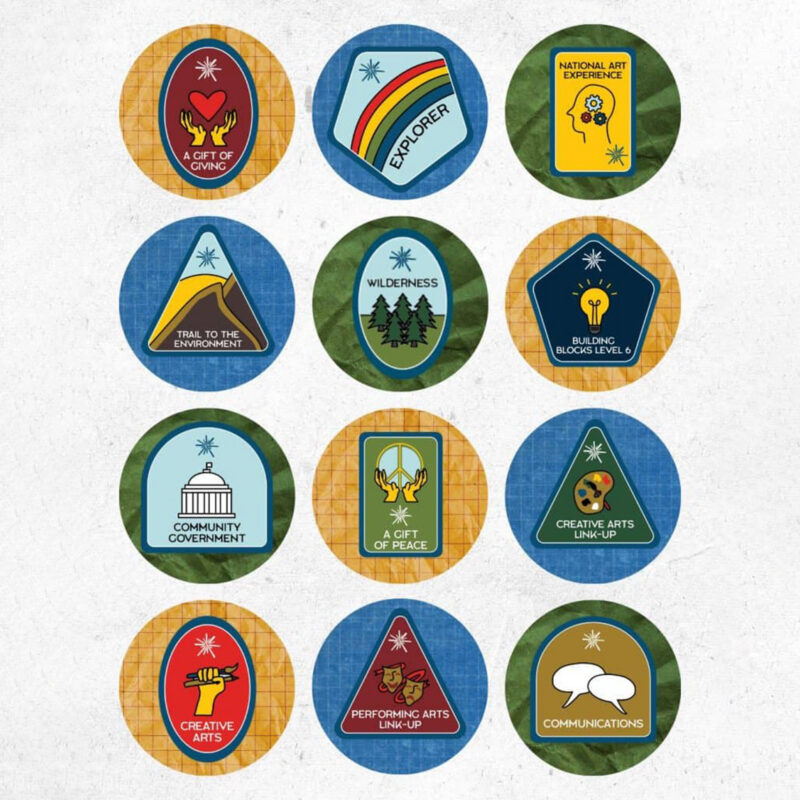
Additionally, symbols from the symbol book were core to our recognition items – emblems – and needed to be updated. In 2021, Camp Fire National Headquarters recruited young people from Camp Fire affiliates across the country to redesign Camp Fire’s rewards and recognition system. Through the Make Your Mark initiative, young people explored the culturally appropriative roots of Camp Fire traditions and reimagined new emblems that made sense for them in today’s world.
In October 2022, the new emblems were released! Affiliates have also worked hard to replace their own symbols – redesigning their custom emblems and changing artwork at Camp Fire camps and properties.
2. Adjusted traditions and artifacts
Like many camps and scouting groups, Camp Fire has historically included dressing in a mock-Indigenous manner as well as creating and participating in ceremonies or songs designed to mimic Native American traditions. Through this journey, we’ve stopped the use of gowns and costumes, with many affiliates finding amazing ways to repurpose materials – more beads for the art studio at camp! Many affiliates have also changed song lyrics, written new songs (alongside youth!) and adjusted ceremonies to still feel special without appropriating Native cultures.
“I can keep the deep meaning my gown had for me, and now I can gain a new perspective about how and why we need to be doing it differently. I’m excited because I realize we can hold both things in our hearts. It’s not either/or. I just love Camp Fire for what it gives to people, and I want everyone to have that meaningful connection you get at camp; it should be a place for all of us.” – Camp Fire Alumna, Central Puget Sound
Many of our camps also had totem poles or tipis at their sites – often these artifacts were created by non-Native participants and are not accurate to the camps locations. For example, totem poles are specific to the Pacific Northwest region, so totem poles at camps in other locations are particularly out of place. One method of removal is to “re-naturalize” these structures – removing them and placing them in a remote area of woods to decompose and rejoin nature. Tipis have also been replaced by new gathering structures so that the intention can remain, without appropriation.
3. Learned, listened, and talked – A LOT!
The core of this work is learning and conversation – both with Native organizations and amongst Camp Fire affiliates. Creating a reciprocal partnership with the National Indian Education Association (NIEA) has informed our next steps. In collaboration with NIEA, we have created a new way of teaching outdoor stewardship – moving gently away from “Leave no Trace” and more towards reciprocity with nature, informed by Native American teaching and philosophies.
Affiliates have used self-assessments provided by Camp Fire National Headquarters to understand and document their history, find and analyze possible instances of appropriation, and make improvement plans. We’ve gathered affiliates in-person and virtually to discuss changes, challenges, and solutions together.
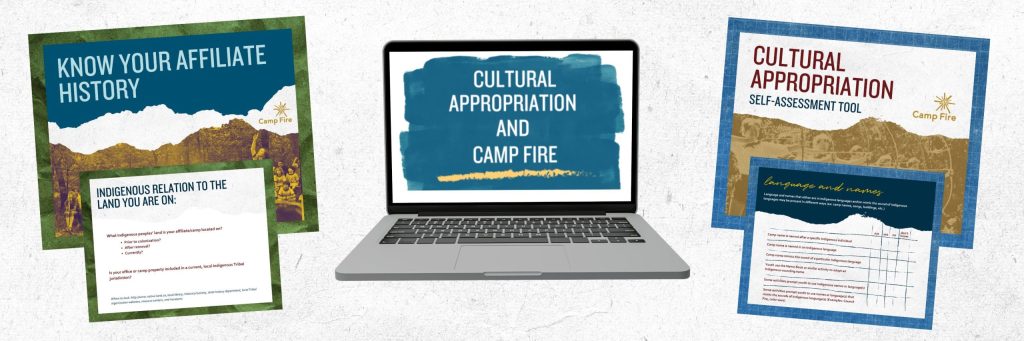
Screenshots of the cultural appropriation self-assessments and course. Image courtesy of Camp Fire.
We’ve also been intentional to educate incoming Camp Fire staff and volunteers about this work. Over 250 Camp Fire adults have taken the first iteration of our Cultural Appropriation course on our Learning Management System.
“Having this as a mandatory course for Camp Fire employees is extremely awesome and makes me feel like I’m working under an organization that has true intentions of moving forward and creating a diverse and inclusive community.”
— Camp Fire affiliate staff member
4. Building native partnerships
We’re excited that our work addressing cultural appropriation has already led to new and deepening connections with Native and Indigenous communities across our network. Affiliates such as Camp Fire Columbia have created camp programs specifically for Native youth. Camp Fire Alaska informed the creation of new training on reciprocity in nature with support from Alaska Native Elders. Camp Fire Central Puget Sound has built a new relationship with the Puyallup Tribe which led to our historic new partnership for our annual youth fundraiser: candy sales.
We also co-wrote a piece with NIEA for the Stanford Social Innovation Review on this very topic, to encourage others to examine their own history and form reciprocal partnerships with Native organizations.
These relationships are just the beginning. Affiliates will gather in the next two years to continue investing in new Tribal relationships.
Key lessons learned
This work took significant effort and thoughtfulness, and we’re grateful to every affiliate and Native partner who has dug into this challenge head-on. Here’s what we’ve learned:
- Start with understanding your history and context. Staying grounded in Camp Fire’s use of the name book, symbol book, and the concurrent history of residential schools and relocation was vital. Creating and using tools for assessing affiliate history, current practices, and needs meant we had a plan in place to promote discussion, support changes, and help focus on the next step.
- Separate intent from impact. We could talk all day about the original intention behind these practices, including the ways our founders hoped they would connect youth to nature and others. But the intent is not important when we know the way our actions have impacted Native youth and communities. Those actions needed to stop, regardless of their intention. We want to be an organization and movement that says, “when we know better, we do better”.
- Building reciprocal partnerships with Native and Indigenous people and organizations. Our national partnership with the NIEA has been vital to the continuation of this work, as have many affiliate connections to local tribes and organizations. But we also want to emphasize the “reciprocal” part. We didn’t need to have a conversation with Native people or a local tribe to know that our naming practices, culturally appropriative traditions, outfits, and artifacts were harmful and needed to stop. Start by taking action, learning about your history, and changing what you know. That commitment goes a long way to building a relationship that is truly accountable and reciprocal.
- Incorporate youth and alumni voice. Young people spurred much of the action to make changes at Camp Fire. Listening when young people express discomfort and then involving them in the work to change rituals, create new songs, and redesign iconography not only makes your changes more responsive, but it also teaches youth what learning and repairing harm looks like in action. Additionally, involving alumni with connections to Camp Fire was vital. While many alumni have positive nostalgic feelings for their experiences in programming, many of those same alumni also expressed discomfort and helped shape name changes and new traditions.
- Provide funding to support making changes. Camp Fire National Headquarters has secured significant funding for affiliates to purchase new signs, create new camp logos, remove artifacts, and tell our story to others. As we continue to make progress, funding will go towards building reciprocal relationships and partnerships with tribes and Native organizations.
“It’s been important that we do not ask NIEA to carry the burden of teaching us or leading us. Instead, we continue to work alongside them, listening, and supporting their leadership. We invest our time, financial support, and people power to further this partnership and our commitment to addressing and ending cultural appropriation.”
— An Update on Camp Fire’s 5-Year Journey from Cultural Appropriation to Relationship-Building
What’s next
The first thing that’s next is simply continuing the work. We’ve still got names to change and traditions to adjust, as well as changes to communicate to families and alumni. Since most of our current programs have ceased culturally appropriative traditions with youth, we’ll be focusing more on alumni now – telling our story and working with them to co-create new traditions for celebrating their Camp Fire history.
As we look to the future, we’re eager to continue this work and support others who are doing the same. The journey is just as valuable as the destination, and this journey has improved our commitment to inclusion and connection to our own history. We encourage you to explore if there’s cultural appropriation in your camps and programs and address it. You will probably discover the same benefits!
Camp Fire previously shared learning from their collaboration with National Indian Education Association (NIEA) in the Stanford Social Innovation Review. The piece highlights their work to address cultural appropriation and repair harm at camps — work Margaret A. Cargill Philanthropies has supported in the Youth Camping & Swimming program within its Quality of Life domain since 2019.
Several components make this effort special, including the catalyst for change coming from the youth attending Camp Fire camps, along with the trust-based partnership between a Native and non-Native organization.