Embracing empathy improves connections to animals and their care
July 27, 2026
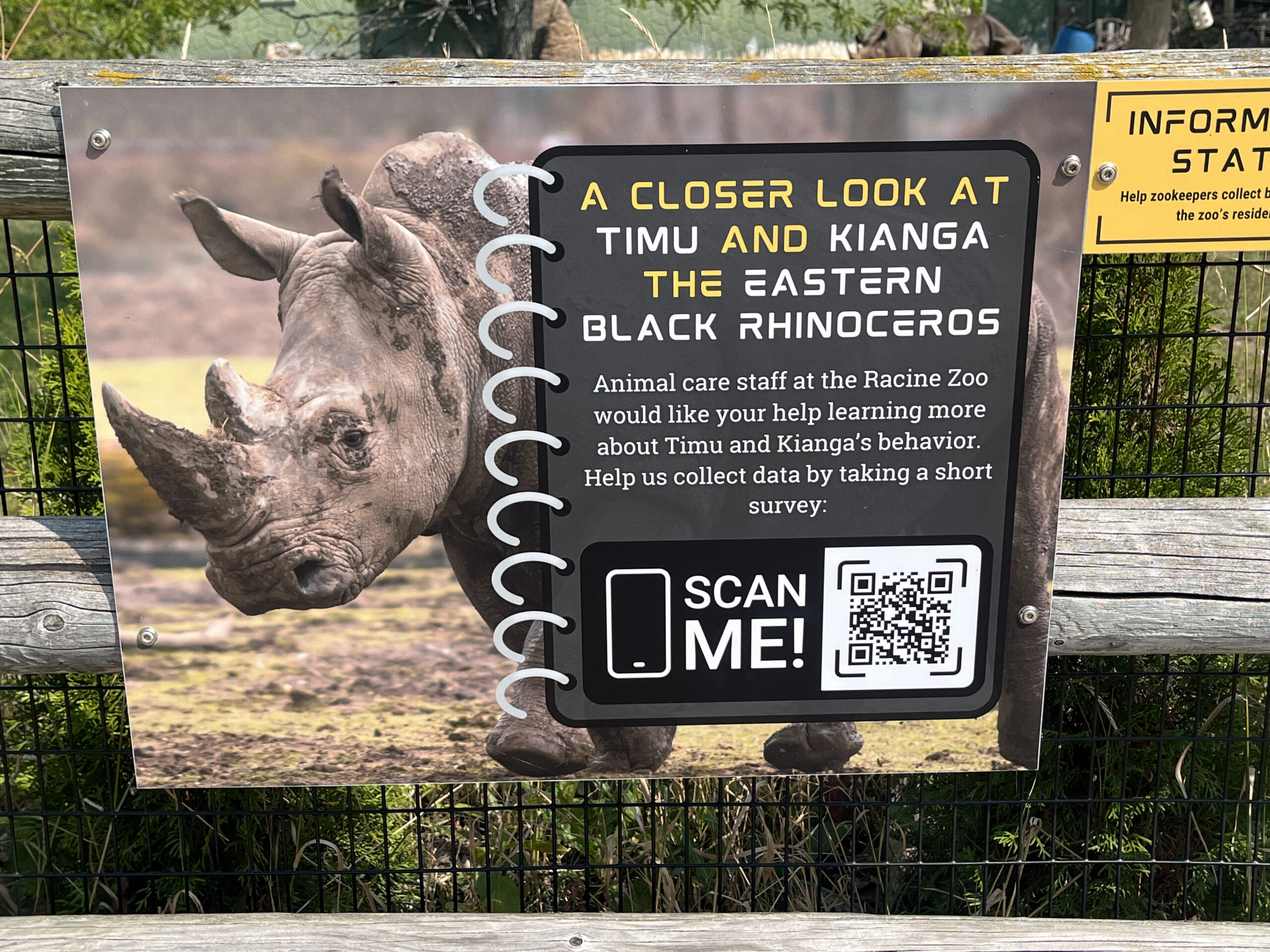
When Kianga the Eastern Black Rhinoceros was showing signs of stress, the animal keepers at Racine Zoo took notice. The zoo’s 32-acre campus on Lake Michigan’s shores had recently reopened, following the COVID-19 shutdown. The then-teenage rhino had not yet readjusted to the Wisconsin zoo’s louder, more chaotic atmosphere. Zoo staff invited guests to help gather behavioral data about both of Racine Zoo’s rhinos through ethograms.
“Ethograms are short, behavioral surveys that we do for our animals to ensure their wellbeing,” Conservation Education Manager Abby Flores explains. “We have signs posted at seven of our habitats with a QR code guests can scan and answer no more than five questions. We get a lot of responses!”
Racine Zoo has implemented the ethograms with grant funding from Woodland Park Zoo’s Advancing Empathy Grant Program. In the last decade, a growing number of zoos and aquariums have used grant funds to foster empathy for animals and the environment to encourage conservation action. Many of those organizations have also joined the Advancing Conservation through Empathy for Wildlife (ACE for Wildlife®) Network. This work is supported by funding from Margaret A. Cargill Philanthropies.
From empathy to action
“There is significant evidence that fostering empathy for wildlife increases people’s likelihood to take all kinds of conservation actions, which is great since that is the core mission of [ACE for Wildlife Network] zoos and aquariums,” said Marta Burnet, Director of Advancing Empathy at Woodland Park Zoo. “Fostering empathy helps us spark that emotional connection to nature and helps people feel more awe and wonder about animals. I think that’s where you really see the magic of empathy.”
The goal of the empathy-forward approach, says Marta, is to help people connect with an animal and present ways they can help the environment as an individual, or as part of a collective. Actions like buying shade-grown coffee, sustainable palm oil, or Forest Stewardship Council-certified paper (which is recycled or sustainably produced) can all help reduce deforestation. Installing solar panels, planting pollinator-friendly gardens, or even writing to an elected official can all help, too.
“For people to take action, they need to feel like it isn’t too complicated and it will have an impact,” says Marta.
“It’s really about helping people see that animals are worthy of our respect and worth saving. It’s also really important to make sure that people are leaving with hope, because if we don’t give people reason to hope, then we’re lost.”
— Marta Burnet, Director of Advancing Empathy, Woodland Park Zoo
Inviting zoo guests to improve animal care
As one of the Advancing Empathy Grant projects, Racine Zoo’s ethograms quickly became a fun, simple way to directly involve guests in animal care and invite them to consider each animal’s unique perspective and experience.
“It’s fun for the guests, and it’s easy,” said Abby. “And it has not only changed how we think about our animals’ behavior, but how we perceive our guests and their capabilities. And it’s changed the welfare of our animals.”
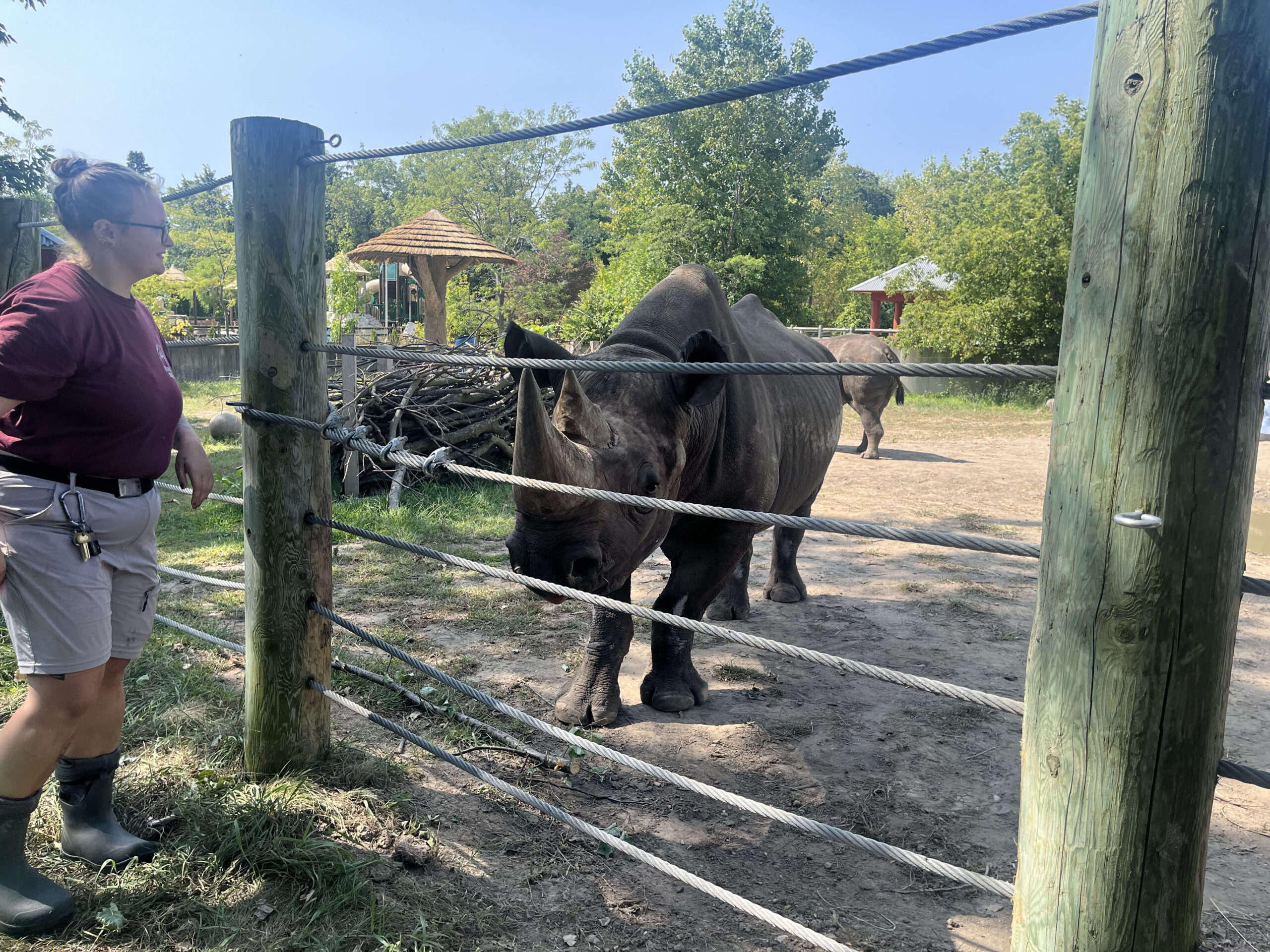
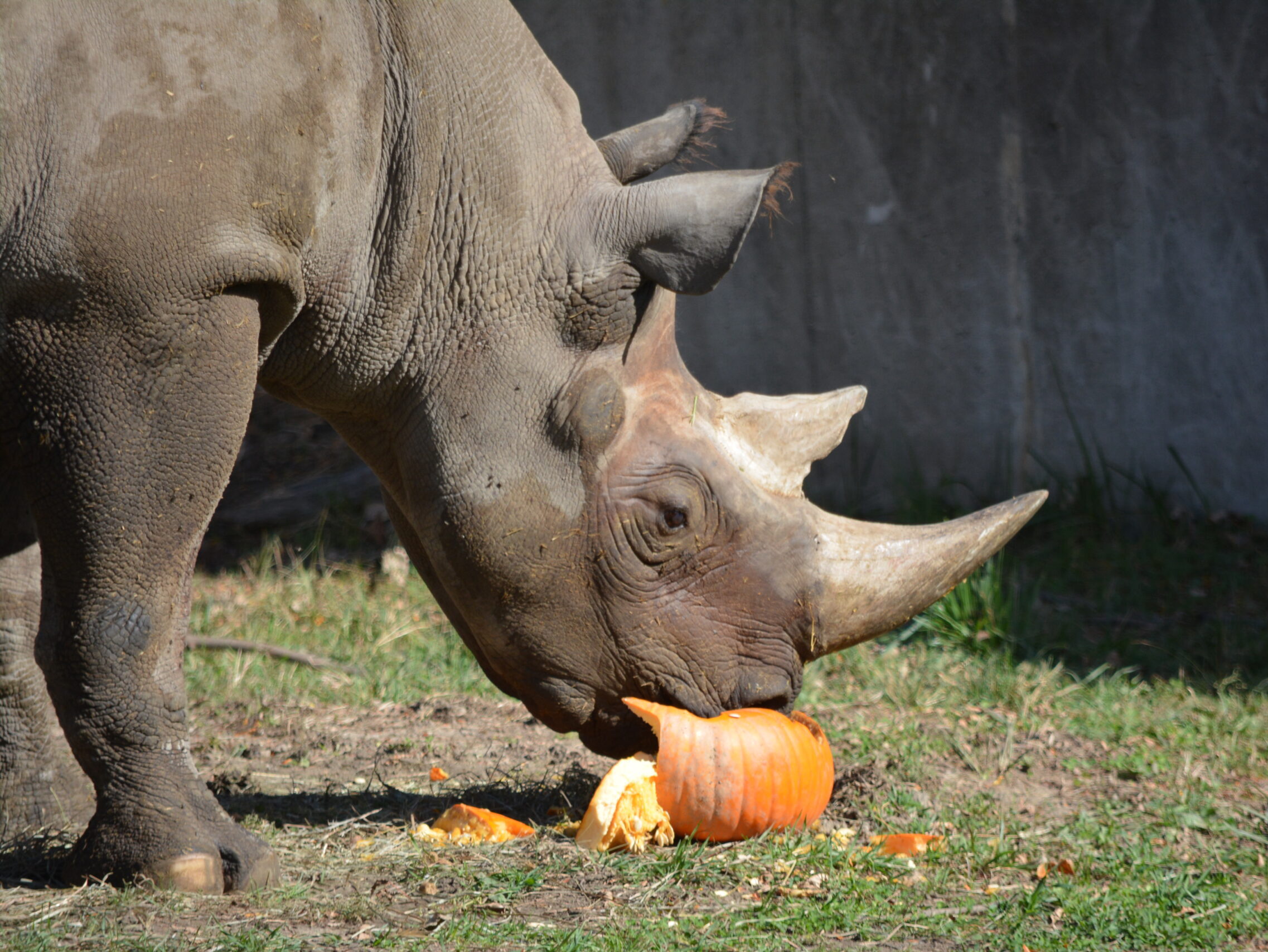
Using guests’ data, zoo staff quickly learned that Kianga and fellow rhino Timu Mbano were spending more than half of their time indoors. As a result, keepers introduced new enrichment opportunities and wellbeing strategies to encourage the rhinos to spend more time outdoors. In just one year, the rhinos were opting to be outdoors 98% of the time, benefitting their overall wellbeing.
“That showed us that the rhinos were now choosing to be outside a lot more often, and the guest impact was there, directly impacting our animals,” said Abby, who notes that guests also benefitted by having far more opportunities to observe the rhinos.
Provided by Racine Zoo
Provided by Racine Zoo
As one visitor who participated in the ethogram project noted, “I learned that rhinos’ mental health, and every other animal, like humans, can take a huge toll due to changes in their environment and everyday life, like the COVID pandemic. I noticed Kianga pacing in the back of his habitat and was thinking that if he has had anxiety due to changes in his life, then other rhinos and animals in the wild likely have a lot of stress when their environment and other animals are threatened due to poaching and deforestation.”
Weaving empathy into every job
At Racine Zoo, empathy training is part of orientation and a part of the job Abby especially enjoys. Abby trains staff to recognize and acknowledge that every animal is an individual, with unique preferences and characteristics. Using animals’ names is encouraged, as is sharing information about their personalities. Abby and her colleagues employ critical anthropomorphism, which is a way of describing and interpreting animal behavior through human experience, but only in ways that are scientifically accurate.
“We have to recognize that we do not feel emotions the same way other animals do,” said Abby. “Cockroaches don’t even sense the world the same way that I do, but I can tell you that both Georgia and Gregory can tell if they’re feeling stressed out because they’ll hiss.”
A small shift with big impact
While the effectiveness of an empathy-focused approach to conservation is supported by data, it is a relatively new paradigm for many U.S. zoos and aquariums. For decades, zookeepers and staff were trained to avoid naming animals or recognizing their distinct personalities. The shift has been welcome for Nicole Hennigan, a Naturalist at Northwest Trek Wildlife Park in Eatonville, Washington.
“Even without the words ‘fostering empathy for wildlife,’ that was very much the methodology that I was already using and looking to incorporate,” said Nicole, who began her career as an animal keeper before pivoting to become a naturalist. “To find out that there’s a whole community of people [through the ACE for Wildlife Network] that are already doing it, supported by science, was incredible.”

A view from Northwest Trek's tram tour, which includes empathic storytelling for guests while they observe free-roaming wildlife. Photo by Katie Cotterill, provided by Northwest Trek Wildlife Park.
Northwest Trek covers 723 acres and houses more than 40 species native to the Pacific Northwest, like gray wolves, bald eagles, and cougars. In the 435-acre Free-Roaming Area, guests can view elk, caribou, and bighorn sheep from Northwest Trek’s electric Discovery Tram Tours, which use empathic storytelling to build conservation connections, thanks in part to another Advancing Empathy Grant.
“We’ve turned the tram programs from a natural history-style narration where you’d say, ‘This is an elk; they can grow up to seven feet tall; their antlers weigh 30 pounds.’ We’ve moved from fun facts to using empathy to tell a story,” Nicole explains. “What do you want your guests to go home with? That elk are big, or that elk are a resource important to the landscape? And here’s how you can protect habitat in your own area.”
Choice and preference in animal care
Nicole thinks of empathy as central to everything Northwest Trek Wildlife Park does. As both an educator and a former animal keeper, she has seen empathy improve the lives of many animals at zoos and aquariums. Nicole explains that choice and agency are paramount to providing animals with the best quality of life.
“We had a cougar who passed away a couple of years ago,” Nicole remembers, “but with consistent, positive training sessions, she got to the point where she was doing voluntary blood draws. She would line up, the keeper would take her tail, do a blood draw from the vein in her tail, and the cougar got goat’s milk out of it. Just like all cats, her blood was something that we were really watching as she got older, and that was something we could do with her that she was participating in. She had that trust and that agency, and if she didn’t want to do it, that was okay. We’d try again another time.”
Nicole says that centering empathy clicks for both staff and guests, who generally come to the wildlife park to better understand the environment and how to care for it. Nicole and her Northwest Trek colleagues strive to connect with guests, value the knowledge they bring, and invite them to take the next step in their own conservation journeys.
“Everybody’s coming in with experience,” said Nicole. “Everybody’s coming in with knowledge. Our guests are here because they love this too. So having more empathy for our guests and figuring out how we can get them to where they want to be in a quick amount of time has really helped.”
More than 2,000 miles away, Abby and her colleagues at Racine Zoo agree.
“One of the six principles of interpretation is that interpretation is an artform, and I think empathy is, too,” said Abby. “And if it’s an art, it can be taught. You can always practice and get better at art, and empathy is the same way. The more you practice it, the more it becomes engrained in you and the more you’re going to be really good at it. So that’s just what we all need to practice.”

Author: Alauna Yust
An Emmy award-winning multimedia producer, writer, and filmmaker based in the Twin Cities. In 2018, she founded Rookwood Media, a video production company that tells stories leading to a kinder, greener, more equitable world. Her work has been distributed nationally by PBS, The Moth Radio Hour, Public Radio Exchange, and many other outlets.