Empathy grants help zoos and aquariums connect with communities
November 24, 2026
For many longtime residents of Seward, Alaska, March 24, 1989 holds great significance. Thirty-seven years ago, the Exxon Valdez oil tanker struck a reef in Prince William Sound, spilling an estimated 11 million gallons of crude oil into the pristine Alaskan waters near the small, coastal town. The contamination decimated marine animal populations and bankrupted many of the region’s fishing businesses.
Following the spill, the community resolved to raise funds to expand the University of Alaska’s existing marine research facilities, lobbying the Alaska legislature and utilizing a portion of the Exxon Valdez settlement. In 1998, the newly created Alaska SeaLife Center (the Center) opened, ushering in a new era of tourism and conservation for the recovering community.
For Shana Kent, the Center’s Learning Engagement and CORaL Project Manager, those origins are an important way to ground her work. She has also centered her career around empathy, a skill she has directly seen helps connect people to wildlife and the environment.
“Everything we do at the SeaLife Center is very much empathy- and conservation-driven,” said Shana. “Caring for and conservation of wildlife has always been a part of it. We are also an active research facility with scientists on staff, as well as the only marine mammal rescue facility in all of Alaska. So a lot of our everyday work is naturally about empathy.”
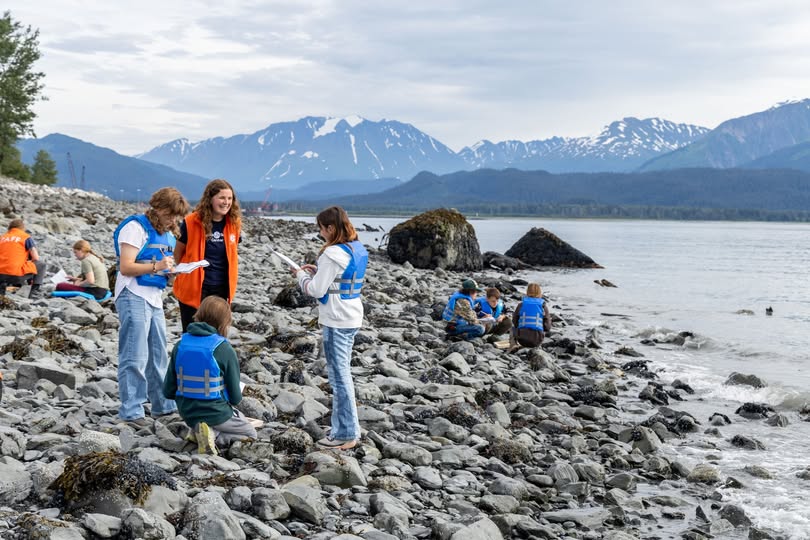
Emma Pinard, Education/Interpretation intern (in orange vest) leads a summer camp lesson. Photo provided by Alaska SeaLife Center.
The Center recently started a day camp for students structured around building empathy for animals through experiential learning. Using funds from Woodland Park Zoo’s Advancing Empathy Grant Program, the camp incorporated empathy for people, animals, and the kids participating. It also used empathy evaluation tools to gauge students’ ability to empathize before and after participating, and invited all students to end the day by making conservation pledges. The camp is one of many grant projects funded by Advancing Empathy Grants, which ultimately aim to increase conservation efforts through a deeper understanding of animals and their environments. This work is supported by funding from Margaret A. Cargill Philanthropies (MACP).
Alaska SeaLife Center is also one of 31 zoos and aquariums that has joined the Advancing Conservation through Empathy for Wildlife (ACE for Wildlife®) Network, which gives staff across the country an opportunity to collaborate and share ideas.
Empathy benefits animals, people, and communities
“I love to see how these [empathy grant] projects impact not only the organizations and animals they directly support, but also how they create lasting change within the communities over time,” said Michele Aguilar Kahrs, Empathy Grant Specialist at Woodland Park Zoo. Some Advancing Empathy Grant projects utilize a co-design approach, says Michele, partnering with communities to understand what they need and then building with them in response.
For Shana, one important aspect of the Center’s day camp program was including Sungt’stun language and cultural stories of the Alutiiq Alaska Native people in the region. The relationships built with the local Alaska Native community helped pave the way for additional projects, like Sungt’stun language signage and a campus-wide audio tour. Although the signage and audio tour were not funded by the Advancing Empathy Grant, Shana says the funds help pave the way for meaningful co-design at the Center.
“We have elders telling stories and speaking on the audio tour because subsistence is such an important part of life and culture for many communities in Alaska,” said Shana. “I think it has helped build the knowledge and respect for Indigenous knowledge, and that’s part of the work we do. There is scientific knowledge and Indigenous knowledge, and neither one is less valuable.”
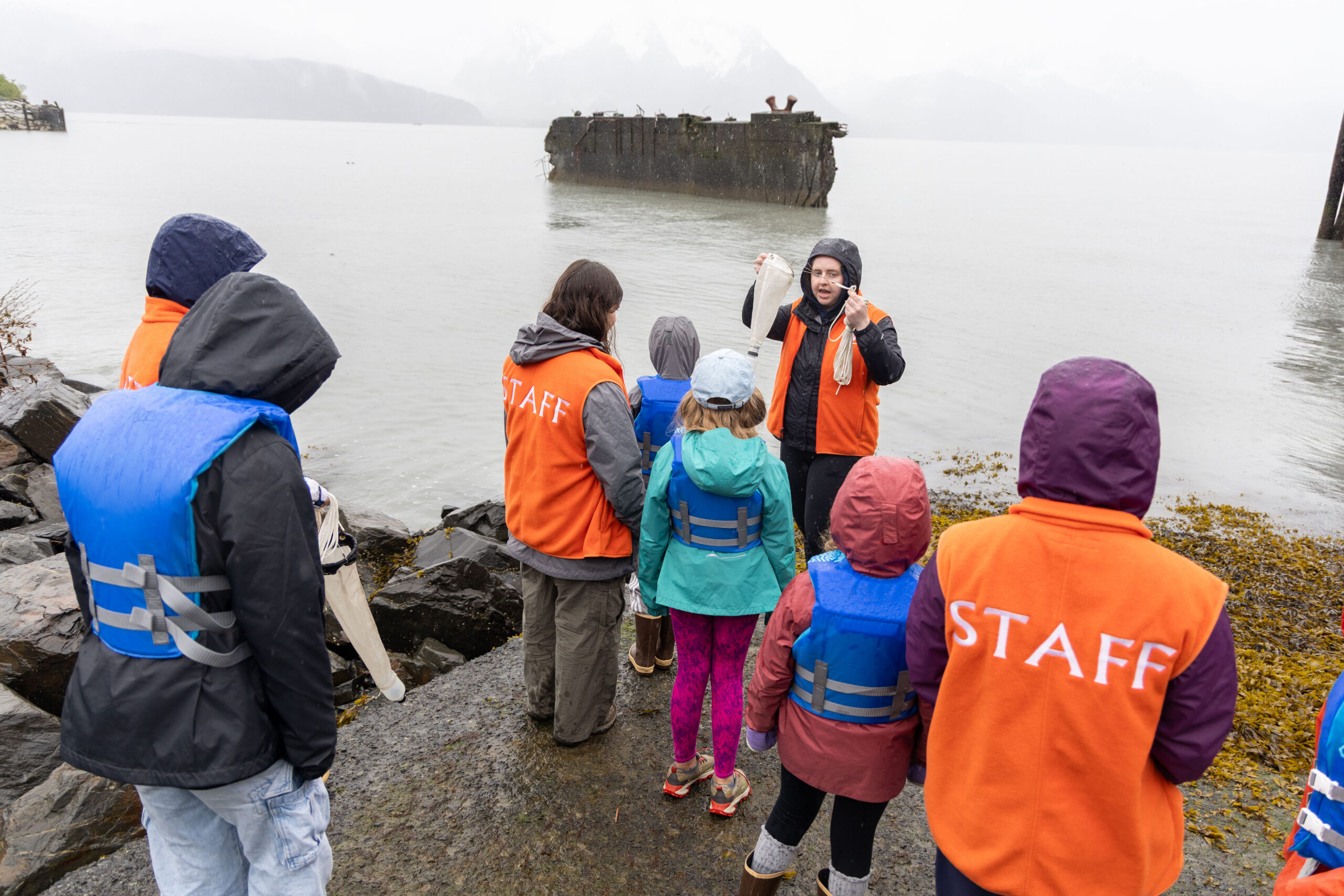
The Alaska SeaLife Center is on the shore of Resurrection Bay, offering ample opportunities to engage with nature right in its backyard. Photo provided by the Center.
Bringing empathy to businesses and the community
In recent years, educators and interpreters from the Center have started joining wildlife sightseeing tours with local companies. Using an empathy-first approach, they offer not just scientific information about wildlife, but additional context about the importance of conservation. This summer, the Center will offer tour staff empathy training tailored specifically to their jobs.
“We’ve been able to show their staff how to not just identify the animal that they’re seeing in the water, but how to tell a story,” said Shana, noting that tours with Center staff have helped local tourism companies sell more tickets. “Tour staff have animal ID cards, but we’re going to help create a version of them that include Indigenous language, and stories that have people leaving with not just seeing a killer whale, but understanding the value of it.”
In the heart of the Midwest, Abby Flores and her colleagues at Racine Zoo have also worked hard to expand programming to the broader community. As the zoo’s Conservation Education Manager, Abby works hard to make sure everyone in Racine has access to the zoo and its backyard: Lake Michigan.
“We are 32 acres, so we are quite a small zoo,” said Abby. “We are in a residential area with neighborhoods on three sides. One side is the lake. Racine is also a city that is pretty divided as far as tax brackets go. There are a lot of kids who come to the zoo and they’ll say, ‘Wow, I’ve never seen that lake before!’ And they live in Racine. It’s on the lake. It’s a port city. So we have this incredible, beautiful opportunity to help these kids who don’t even realize that this lake is there and they are part of this ecosystem.”
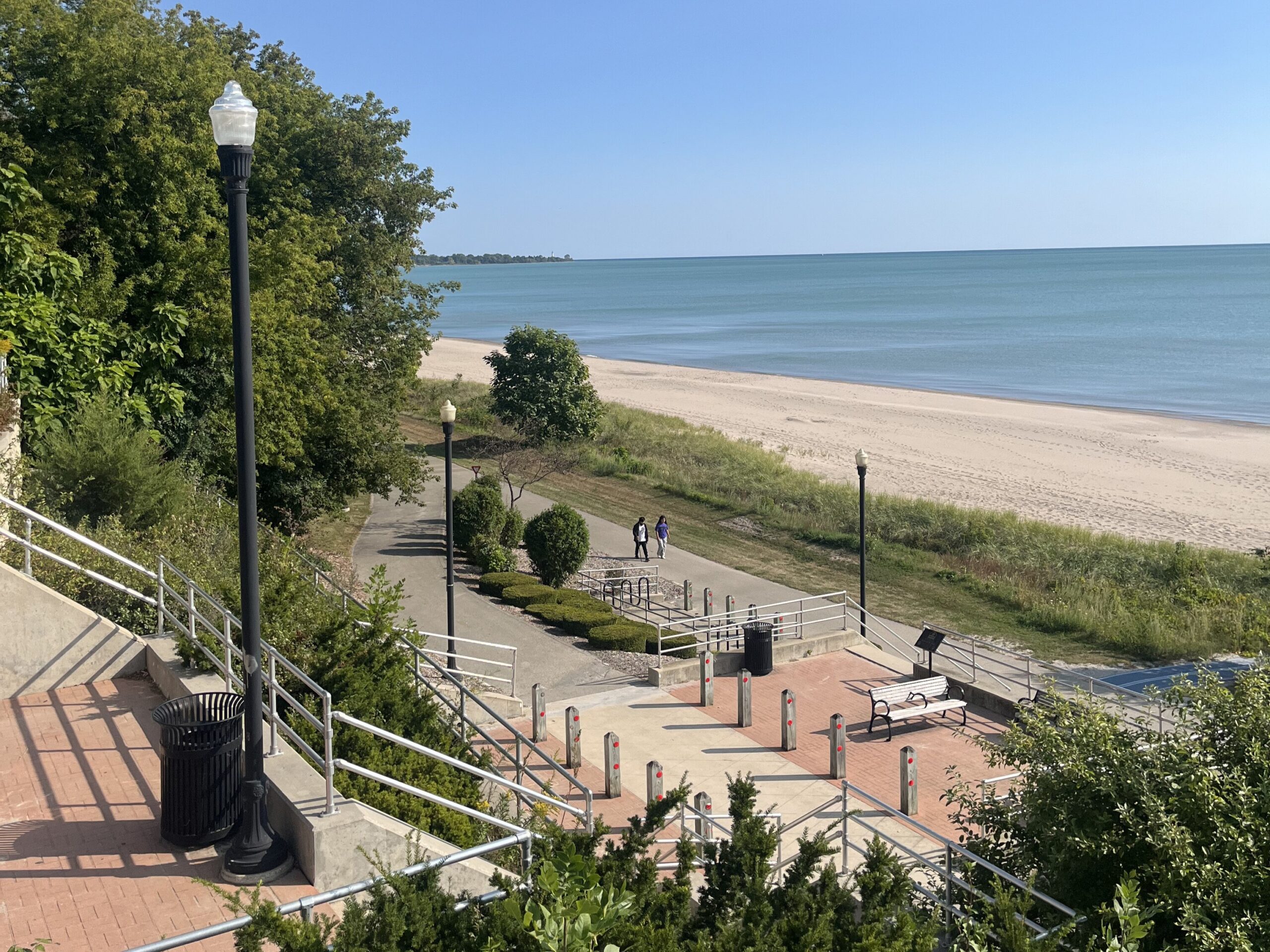
Racine Zoo is on the shore of Lake Michigan and connects guests to their local ecosystem. Photo provided by Racine Zoo.
Much of the zoo’s educational programming revolves around how to help connect people to nature within their own community. Through a combination of grant and private funds, Racine Zoo works to bring kids to the zoo and to Lake Michigan. Abby notes that as one of the city’s few green spaces, the zoo has a unique opportunity to invite the community in and learn more about conservation.
“We want this to be a safe place in nature not just for the animals, but for the people that come to the zoo as well,” said Abby.
Empathy starts with listening
Wellbeing has become a focus area for Woodland Park Zoo in Seattle, too. Through long-term engagement with the broader community, the zoo learned that mental health, especially for young people, was an issue of critical importance. They worked hard to listen first to the community’s needs, then respond with empathy, as zoos and aquariums across the ACE for Wildlife Network have done.
“We need to meet our community where they are and address barriers so youth can connect with nature."
— Marta Burnet, Director of Advancing Empathy, Woodland Park Zoo
Marta shares, “Research shows time in nature can improve mental, emotional, and physical wellbeing. As you create opportunities for youth to build this connection and identity, they will start seeing nature and hopefully the zoo as a place of refuge. Sure, there will still be conservation actions people can take, but you have to make sure that you’re meeting their needs before we start sharing all the things we want them to do.”
Shana at Alaska SeaLife Center agrees that empathy is the best starting point when working toward community-wide transformation. Grant funding, she says, has given zoos and aquariums a chance to innovate and try new approaches that could lead to long-lasting change.
“Much of [our empathy] programming would not be possible without the funding from MACP and without the ACE for Wildlife Network,” said Shana. “You may be testing this idea, and it may not be profitable for the first couple of years. All of this has really helped me to define how I approach my job, but also allowed us to integrate empathy into our work, to take it beyond the education department, into other departments, and into the community programs that we’re doing.”

Author: Alauna Yust
An Emmy award-winning multimedia producer, writer, and filmmaker based in the Twin Cities. In 2018, she founded Rookwood Media, a video production company that tells stories leading to a kinder, greener, more equitable world. Her work has been distributed nationally by PBS, The Moth Radio Hour, Public Radio Exchange, and many other outlets.